



0
108
0
Millie Millie_Zemlak
(NewsUSA) - When business giants Target, Home Depot and Sony got hacked, and personal information was compromised, data security, once again, became a hot topic and household word.
Sure, you know you need to do more to shield your identity, but let's face it, you can only do so much to protect yourself, and even that is reliant on other people or companies. Unfortunately, these same entities can clearly be careless.
When people aren't careful, the Internet can become a playground for criminal activity. Whether you're checking your email, banking information or doing some online shopping, you have already put yourself at risk of having your identity stolen.
Criminals have developed several ways to obtain personal data from innocent Internet users. According to the United States Department of Justice, cyber criminals can take over an individual's identity to conduct a wide range of crimes. Criminals like to make fraudulent withdrawals from bank accounts because victims usually don't become aware of the criminal activity until substantial and irreversible damage has already been done.
Enter Gabriel, a set of secure communication apps derived from a U.S. Department of Defense project and created by VirnetX, an Internet security software and technology company.
Gabriel transmits information using automatic virtual private networks with military-grade encryption. Think Cryptograms.
"Gabriel has been designed and built with personal privacy and security as a foundational principle," says Dr. Robert Short, VirnetX Chief Technical Officer and Chief Scientist. "As a result, Gabriel provides uncompromising data security? users do not have to transmit data to, or store data with, any third party, including VirnetX. Users can therefore rest easy that their data is stored only on their devices."
Other benefits from using Gabriel include:
* Making free voice or video calls or sending instant messages to other Gabriel members in your network.
* Receiving spamless e-mail.
* Allowing for person-to-person messages that disappear once the session has ended.
* Sharing pictures or files with other trusted Gabriel users in your network directly from your personal device.
All of the above is done with other members of your network with the assurance that the transmissions are secured with end-to-end encryption.
Simply put, Gabriel makes your online communications invisible. Think of it this way: if the bad guys can't see you, they can't attack you.
Gabriel is free to try. For more information, please visit www.gabrielsecure.com.
Ref: Computers - in Blogs
Sure, you know you need to do more to shield your identity, but let's face it, you can only do so much to protect yourself, and even that is reliant on other people or companies. Unfortunately, these same entities can clearly be careless.
When people aren't careful, the Internet can become a playground for criminal activity. Whether you're checking your email, banking information or doing some online shopping, you have already put yourself at risk of having your identity stolen.
Criminals have developed several ways to obtain personal data from innocent Internet users. According to the United States Department of Justice, cyber criminals can take over an individual's identity to conduct a wide range of crimes. Criminals like to make fraudulent withdrawals from bank accounts because victims usually don't become aware of the criminal activity until substantial and irreversible damage has already been done.
Enter Gabriel, a set of secure communication apps derived from a U.S. Department of Defense project and created by VirnetX, an Internet security software and technology company.
Gabriel transmits information using automatic virtual private networks with military-grade encryption. Think Cryptograms.
"Gabriel has been designed and built with personal privacy and security as a foundational principle," says Dr. Robert Short, VirnetX Chief Technical Officer and Chief Scientist. "As a result, Gabriel provides uncompromising data security? users do not have to transmit data to, or store data with, any third party, including VirnetX. Users can therefore rest easy that their data is stored only on their devices."
Other benefits from using Gabriel include:
* Making free voice or video calls or sending instant messages to other Gabriel members in your network.
* Receiving spamless e-mail.
* Allowing for person-to-person messages that disappear once the session has ended.
* Sharing pictures or files with other trusted Gabriel users in your network directly from your personal device.
All of the above is done with other members of your network with the assurance that the transmissions are secured with end-to-end encryption.
Simply put, Gabriel makes your online communications invisible. Think of it this way: if the bad guys can't see you, they can't attack you.
Gabriel is free to try. For more information, please visit www.gabrielsecure.com.
Ref: Computers - in Blogs
(NewsUSA) - When business giants Target, Home Depot and Sony got hacked, and personal information was compromised, data security, once again, became a hot topic and household word.<br />
<br />
Sure, you know you need to do more to shield your identity, but let's face it, you can only do so much to protect yourself, and even that is reliant on other people or companies. Unfortunately, these same entities can clearly be careless.<br />
<br />
When people aren't careful, the Internet can become a playground for criminal activity. Whether you're checking your email, banking information or doing some online shopping, you have already put yourself at risk of having your identity stolen.<br />
<br />
Criminals have developed several ways to obtain personal data from innocent Internet users. According to the United States Department of Justice, cyber criminals can take over an individual's identity to conduct a wide range of crimes. Criminals like to make fraudulent withdrawals from bank accounts because victims usually don't become aware of the criminal activity until substantial and irreversible damage has already been done.<br />
<br />
Enter Gabriel, a set of secure communication apps derived from a U.S. Department of Defense project and created by VirnetX, an Internet security software and technology company.<br />
<br />
Gabriel transmits information using automatic virtual private networks with military-grade encryption. Think Cryptograms.<br />
<br />
"Gabriel has been designed and built with personal privacy and security as a foundational principle," says Dr. Robert Short, VirnetX Chief Technical Officer and Chief Scientist. "As a result, Gabriel provides uncompromising data security? users do not have to transmit data to, or store data with, any third party, including VirnetX. Users can therefore rest easy that their data is stored only on their devices."<br />
<br />
Other benefits from using Gabriel include:<br />
<br />
* Making free voice or video calls or sending instant messages to other Gabriel members in your network.<br />
<br />
* Receiving spamless e-mail.<br />
<br />
* Allowing for person-to-person messages that disappear once the session has ended.<br />
<br />
* Sharing pictures or files with other trusted Gabriel users in your network directly from your personal device.<br />
<br />
All of the above is done with other members of your network with the assurance that the transmissions are secured with end-to-end encryption.<br />
<br />
Simply put, Gabriel makes your online communications invisible. Think of it this way: if the bad guys can't see you, they can't attack you.<br />
<br />
Gabriel is free to try. For more information, please visit www.gabrielsecure.com.<br />
<br />
Ref: Computers - in Blogs
Read more
0
38
0
0
Aric Aric_Feeney
Category: Photography - in Blogs
<br />
<br />
<span style='display:none' class='DO NOT REMOVE - THIS CATEGORY CODE WILL BE HIDDEN - IT IS NEEDED TO BE FOUND BY CATEGORY AND ONE-CLICK SEARCH'>Category: Photography - in Blogs</span>
Read more
1
72
0
0
Millie Millie_Zemlak
(NewsUSA) - They may not make those "Agony of Defeat" sports reels, but amateur athletes get injured all the time. Maybe it's from an awkward golf swing. Or maybe it's from not warming up or stretching before an event.
Whatever the cause, though, there's one scary thing they have in common with the pros.
"The reality is that all athletes are one fall, twist, or tweak away from landing their own opioid prescription," Outside magazine warned.
The warning couldn't be better timed. It's not just that the country is in the midst of an opioid crisis that's claimed the lives of thousands of prescription painkiller abusers and left countless more addicted to the likes of OxyContin. It's also that -- as the magazine also noted -- physicians seem to be starting to heed last year's urging by the Centers for Disease Control and Prevention to dramatically curtail prescribing the drugs.
According to a survey conducted for the Boston Globe by the SERMO physicians social network, more than half of doctors across America are doing exactly that, and nearly one in 10 have completely stopped prescribing them.
So what's an amateur athlete suffering from pain supposed to do? One especially popular alternative is drug-free chiropractic care.
Whereas opioids (and Ibuprofen forms of over-the-counter drugs) only "mask" the pain, doctors of chiropractic approach the problem highly educated and trained in the structure and function of the human body.
And they use hands-on techniques to help enhance flexibility, muscle strength, and range of motion -; the very things all athletes need addressing. And yes, as the Foundation for Chiropractic Progress' Dr. Sherry McAllister says, chiropractic is covered by most insurance and health plans.
To locate a nearby doctor of chiropractic,visit f4cp.com/findadoctor.
Ref: Cool - in Blogs
Whatever the cause, though, there's one scary thing they have in common with the pros.
"The reality is that all athletes are one fall, twist, or tweak away from landing their own opioid prescription," Outside magazine warned.
The warning couldn't be better timed. It's not just that the country is in the midst of an opioid crisis that's claimed the lives of thousands of prescription painkiller abusers and left countless more addicted to the likes of OxyContin. It's also that -- as the magazine also noted -- physicians seem to be starting to heed last year's urging by the Centers for Disease Control and Prevention to dramatically curtail prescribing the drugs.
According to a survey conducted for the Boston Globe by the SERMO physicians social network, more than half of doctors across America are doing exactly that, and nearly one in 10 have completely stopped prescribing them.
So what's an amateur athlete suffering from pain supposed to do? One especially popular alternative is drug-free chiropractic care.
Whereas opioids (and Ibuprofen forms of over-the-counter drugs) only "mask" the pain, doctors of chiropractic approach the problem highly educated and trained in the structure and function of the human body.
And they use hands-on techniques to help enhance flexibility, muscle strength, and range of motion -; the very things all athletes need addressing. And yes, as the Foundation for Chiropractic Progress' Dr. Sherry McAllister says, chiropractic is covered by most insurance and health plans.
To locate a nearby doctor of chiropractic,visit f4cp.com/findadoctor.
Ref: Cool - in Blogs
(NewsUSA) - They may not make those "Agony of Defeat" sports reels, but amateur athletes get injured all the time. Maybe it's from an awkward golf swing. Or maybe it's from not warming up or stretching before an event.<br />
<br />
Whatever the cause, though, there's one scary thing they have in common with the pros.<br />
<br />
"The reality is that all athletes are one fall, twist, or tweak away from landing their own opioid prescription," Outside magazine warned.<br />
<br />
The warning couldn't be better timed. It's not just that the country is in the midst of an opioid crisis that's claimed the lives of thousands of prescription painkiller abusers and left countless more addicted to the likes of OxyContin. It's also that -- as the magazine also noted -- physicians seem to be starting to heed last year's urging by the Centers for Disease Control and Prevention to dramatically curtail prescribing the drugs.<br />
<br />
According to a survey conducted for the Boston Globe by the SERMO physicians social network, more than half of doctors across America are doing exactly that, and nearly one in 10 have completely stopped prescribing them.<br />
<br />
So what's an amateur athlete suffering from pain supposed to do? One especially popular alternative is drug-free chiropractic care.<br />
<br />
Whereas opioids (and Ibuprofen forms of over-the-counter drugs) only "mask" the pain, doctors of chiropractic approach the problem highly educated and trained in the structure and function of the human body.<br />
<br />
And they use hands-on techniques to help enhance flexibility, muscle strength, and range of motion -; the very things all athletes need addressing. And yes, as the Foundation for Chiropractic Progress' Dr. Sherry McAllister says, chiropractic is covered by most insurance and health plans.<br />
<br />
To locate a nearby doctor of chiropractic,visit f4cp.com/findadoctor.<br />
<br />
Ref: Cool - in Blogs
Read more
0
35
0
0
Vanessa Vanessa_Leannon
Category: Photography - in Blogs
<br />
<br />
<span style='display:none' class='DO NOT REMOVE - THIS CATEGORY CODE WILL BE HIDDEN - IT IS NEEDED TO BE FOUND BY CATEGORY AND ONE-CLICK SEARCH'>Category: Photography - in Blogs</span>
Read more
0
81
0
0
Millie Millie_Zemlak
(NewsUSA) - Today most homeowners want to do right by the environment while also caring for the health and wellness of their own families. But they don't always know what measures they can take with the design, construction, and furnishing of their houses to achieve eco-friendly, health-enhancing results.
"Many responsible consumers are uncertain what a 'sustainable' product or material is," notes Linda Jovanovich of the American Hardwood Information Center, www.hardwoodinfo.com.
"It simply means the particular resource is self-replenishing - something we can use freely now without fear that its supply will run out in the future. Since American hardwood forests renew themselves almost twice as fast as they are harvested, the U.S. supply of hardwoods for flooring, furniture, cabinetry, and millwork is sustainable now and for generations to come."
As well as being plentiful and sustainable, American hardwood is carbon neutral: Growing trees absorb carbon dioxide from the atmosphere and break it down into oxygen, which is returned to the air, and carbon, which is used to create roots, trunk, branches, and leaves. In short, the use of natural American hardwoods throughout a house helps with the long-term removal of carbon from the environment.
Hardwood can also benefit a household's general well-being.
When artist Hadley Williams renovated her family home in California's Bay Area, she asked the makeover team - designer Sherry Williamson, architect Andrew Mann, and builder Michael McCutcheon - for a clean-lined, ultra-eco-friendly residence. They wrapped all the floors, ceilings, walls, and casework in the gutted interiors with plain-sawn American white oak, achieving a beautiful balance among aesthetics, sustainability, and healthfulness.
Since the latter was a priority, each and every building product used was screened for a comprehensive list of more than 900 chemicals of concern. Using solid timber helped avoid the unhealthy volatile organic compounds (VOCs) found in laminate glues. Thanks to those efforts, the house has been certified LEED Platinum - the U.S. Green Building Council's highest ranking.
Architect Stephanie Horowitz of Boston-based ZeroEnergy Design is another expert at creating contemporary, environmentally sensitive, family-friendly homes.
"We regularly specify domestic, sustainably harvested hardwood floors," she says.
"When paired with a non-VOC finish, a hardwood floor helps maintain healthy indoor-air quality while allowing us to support local business and overall environmental health."
Such was the case with a house she recently designed for a client who wanted an exceptionally healthy and comfortable living environment in a traditional neighborhood. By installing quarter-sawn white-oak floors, and selecting other durable materials and finishes with low or no VOCs and no added urea formaldehyde, Horowitz was able to achieve LEED-platinum certification for the house and, more importantly, ensure that its inhabitants can breathe easy.
Visit www.hardwoodinfo.com for more about sustainability and healthfulness in relation to home applications and products using American hardwoods.
Ref: Construction - in Blogs
"Many responsible consumers are uncertain what a 'sustainable' product or material is," notes Linda Jovanovich of the American Hardwood Information Center, www.hardwoodinfo.com.
"It simply means the particular resource is self-replenishing - something we can use freely now without fear that its supply will run out in the future. Since American hardwood forests renew themselves almost twice as fast as they are harvested, the U.S. supply of hardwoods for flooring, furniture, cabinetry, and millwork is sustainable now and for generations to come."
As well as being plentiful and sustainable, American hardwood is carbon neutral: Growing trees absorb carbon dioxide from the atmosphere and break it down into oxygen, which is returned to the air, and carbon, which is used to create roots, trunk, branches, and leaves. In short, the use of natural American hardwoods throughout a house helps with the long-term removal of carbon from the environment.
Hardwood can also benefit a household's general well-being.
When artist Hadley Williams renovated her family home in California's Bay Area, she asked the makeover team - designer Sherry Williamson, architect Andrew Mann, and builder Michael McCutcheon - for a clean-lined, ultra-eco-friendly residence. They wrapped all the floors, ceilings, walls, and casework in the gutted interiors with plain-sawn American white oak, achieving a beautiful balance among aesthetics, sustainability, and healthfulness.
Since the latter was a priority, each and every building product used was screened for a comprehensive list of more than 900 chemicals of concern. Using solid timber helped avoid the unhealthy volatile organic compounds (VOCs) found in laminate glues. Thanks to those efforts, the house has been certified LEED Platinum - the U.S. Green Building Council's highest ranking.
Architect Stephanie Horowitz of Boston-based ZeroEnergy Design is another expert at creating contemporary, environmentally sensitive, family-friendly homes.
"We regularly specify domestic, sustainably harvested hardwood floors," she says.
"When paired with a non-VOC finish, a hardwood floor helps maintain healthy indoor-air quality while allowing us to support local business and overall environmental health."
Such was the case with a house she recently designed for a client who wanted an exceptionally healthy and comfortable living environment in a traditional neighborhood. By installing quarter-sawn white-oak floors, and selecting other durable materials and finishes with low or no VOCs and no added urea formaldehyde, Horowitz was able to achieve LEED-platinum certification for the house and, more importantly, ensure that its inhabitants can breathe easy.
Visit www.hardwoodinfo.com for more about sustainability and healthfulness in relation to home applications and products using American hardwoods.
Ref: Construction - in Blogs
(NewsUSA) - Today most homeowners want to do right by the environment while also caring for the health and wellness of their own families. But they don't always know what measures they can take with the design, construction, and furnishing of their houses to achieve eco-friendly, health-enhancing results.<br />
<br />
"Many responsible consumers are uncertain what a 'sustainable' product or material is," notes Linda Jovanovich of the American Hardwood Information Center, www.hardwoodinfo.com.<br />
<br />
"It simply means the particular resource is self-replenishing - something we can use freely now without fear that its supply will run out in the future. Since American hardwood forests renew themselves almost twice as fast as they are harvested, the U.S. supply of hardwoods for flooring, furniture, cabinetry, and millwork is sustainable now and for generations to come."<br />
<br />
As well as being plentiful and sustainable, American hardwood is carbon neutral: Growing trees absorb carbon dioxide from the atmosphere and break it down into oxygen, which is returned to the air, and carbon, which is used to create roots, trunk, branches, and leaves. In short, the use of natural American hardwoods throughout a house helps with the long-term removal of carbon from the environment.<br />
<br />
Hardwood can also benefit a household's general well-being.<br />
<br />
When artist Hadley Williams renovated her family home in California's Bay Area, she asked the makeover team - designer Sherry Williamson, architect Andrew Mann, and builder Michael McCutcheon - for a clean-lined, ultra-eco-friendly residence. They wrapped all the floors, ceilings, walls, and casework in the gutted interiors with plain-sawn American white oak, achieving a beautiful balance among aesthetics, sustainability, and healthfulness.<br />
<br />
Since the latter was a priority, each and every building product used was screened for a comprehensive list of more than 900 chemicals of concern. Using solid timber helped avoid the unhealthy volatile organic compounds (VOCs) found in laminate glues. Thanks to those efforts, the house has been certified LEED Platinum - the U.S. Green Building Council's highest ranking.<br />
<br />
Architect Stephanie Horowitz of Boston-based ZeroEnergy Design is another expert at creating contemporary, environmentally sensitive, family-friendly homes.<br />
<br />
"We regularly specify domestic, sustainably harvested hardwood floors," she says.<br />
<br />
"When paired with a non-VOC finish, a hardwood floor helps maintain healthy indoor-air quality while allowing us to support local business and overall environmental health."<br />
<br />
Such was the case with a house she recently designed for a client who wanted an exceptionally healthy and comfortable living environment in a traditional neighborhood. By installing quarter-sawn white-oak floors, and selecting other durable materials and finishes with low or no VOCs and no added urea formaldehyde, Horowitz was able to achieve LEED-platinum certification for the house and, more importantly, ensure that its inhabitants can breathe easy.<br />
<br />
Visit www.hardwoodinfo.com for more about sustainability and healthfulness in relation to home applications and products using American hardwoods.<br />
<br />
Ref: Construction - in Blogs
Read more
0
29
0
0
Millie Millie_Zemlak
(NewsUSA) - No matter who you are or what business you are in, you're vulnerable to a cyber attack. That's the unfortunate reality of the times we live in.
Think you're immune? There are millions of cyberattacks in the United States every year, with big companies like Home Depot, Adobe Systems, Sony, Citigroup, Target, Facebook, Evernote and The New York Times taking the biggest hits and falling victim.
And like Fortune 500 companies that seemingly have the resources to battle data breaches, small businesses are just as exposed, if not more so. According to a Verizon Data Breach Investigations Report more than 70 percent of the businesses in the study that were breached had fewer than 100 employees. Those breaches result in huge losses. Trend Micro found that "cybercriminals steal as much as $1 billion a year from SMBs in the United States and Europe, alone."
Which begs the question: If both large and small companies and the U.S. government can be compromised (even with security protocols in place), then what does that mean for individuals?
It's a question that Dr. Robert Short, chief technology officer and chief technical scientist of VirnetX, struggled with and finally answered in the form of Gabriel, a set of secure encrypted communication apps derived from a CIA-sponsored Department of Defense project.
"The genesis of Gabriel really was trying to solve the problem of how you make security transparent to the user. The means to automatically create a secure connection whenever a secure connection is needed to wherever it is needed, and create it on demand," says Short. "That has always been the vision behind Gabriel."
The difference between Gabriel and other products, says Short, is that users do not have to transmit data to or store data with any third party, including VirnetX. In this way, data is stored only on their own devices. Essentially, users maintain control of their own data.
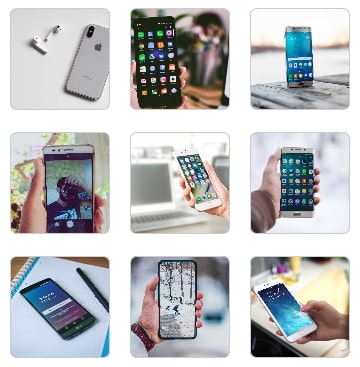
Gabriel users also have secure, encrypted (spamless) email, text messages, free voice and video calls and picture or file share with other trusted Gabriel users in their network -- all directly from their personal device.
Gabriel runs on iPhone, iPad, Android, Windows and Mac OSX. For more information or to download Gabriel go to gabrielsecure.com, the App Store or the Google Play store.
Ref: Datacenters - in Blogs
Think you're immune? There are millions of cyberattacks in the United States every year, with big companies like Home Depot, Adobe Systems, Sony, Citigroup, Target, Facebook, Evernote and The New York Times taking the biggest hits and falling victim.
And like Fortune 500 companies that seemingly have the resources to battle data breaches, small businesses are just as exposed, if not more so. According to a Verizon Data Breach Investigations Report more than 70 percent of the businesses in the study that were breached had fewer than 100 employees. Those breaches result in huge losses. Trend Micro found that "cybercriminals steal as much as $1 billion a year from SMBs in the United States and Europe, alone."
Which begs the question: If both large and small companies and the U.S. government can be compromised (even with security protocols in place), then what does that mean for individuals?
It's a question that Dr. Robert Short, chief technology officer and chief technical scientist of VirnetX, struggled with and finally answered in the form of Gabriel, a set of secure encrypted communication apps derived from a CIA-sponsored Department of Defense project.
"The genesis of Gabriel really was trying to solve the problem of how you make security transparent to the user. The means to automatically create a secure connection whenever a secure connection is needed to wherever it is needed, and create it on demand," says Short. "That has always been the vision behind Gabriel."
The difference between Gabriel and other products, says Short, is that users do not have to transmit data to or store data with any third party, including VirnetX. In this way, data is stored only on their own devices. Essentially, users maintain control of their own data.
Gabriel users also have secure, encrypted (spamless) email, text messages, free voice and video calls and picture or file share with other trusted Gabriel users in their network -- all directly from their personal device.
Gabriel runs on iPhone, iPad, Android, Windows and Mac OSX. For more information or to download Gabriel go to gabrielsecure.com, the App Store or the Google Play store.
Ref: Datacenters - in Blogs
(NewsUSA) - No matter who you are or what business you are in, you're vulnerable to a cyber attack. That's the unfortunate reality of the times we live in.<br />
<br />
Think you're immune? There are millions of cyberattacks in the United States every year, with big companies like Home Depot, Adobe Systems, Sony, Citigroup, Target, Facebook, Evernote and The New York Times taking the biggest hits and falling victim.<br />
<br />
And like Fortune 500 companies that seemingly have the resources to battle data breaches, small businesses are just as exposed, if not more so. According to a Verizon Data Breach Investigations Report more than 70 percent of the businesses in the study that were breached had fewer than 100 employees. Those breaches result in huge losses. Trend Micro found that "cybercriminals steal as much as $1 billion a year from SMBs in the United States and Europe, alone."<br />
<br />
Which begs the question: If both large and small companies and the U.S. government can be compromised (even with security protocols in place), then what does that mean for individuals?<br />
<br />
It's a question that Dr. Robert Short, chief technology officer and chief technical scientist of VirnetX, struggled with and finally answered in the form of Gabriel, a set of secure encrypted communication apps derived from a CIA-sponsored Department of Defense project.<br />
<br />
"The genesis of Gabriel really was trying to solve the problem of how you make security transparent to the user. The means to automatically create a secure connection whenever a secure connection is needed to wherever it is needed, and create it on demand," says Short. "That has always been the vision behind Gabriel."<br />
<br />
The difference between Gabriel and other products, says Short, is that users do not have to transmit data to or store data with any third party, including VirnetX. In this way, data is stored only on their own devices. Essentially, users maintain control of their own data.<br />
<br />
Gabriel users also have secure, encrypted (spamless) email, text messages, free voice and video calls and picture or file share with other trusted Gabriel users in their network -- all directly from their personal device.<br />
<br />
Gabriel runs on iPhone, iPad, Android, Windows and Mac OSX. For more information or to download Gabriel go to gabrielsecure.com, the App Store or the Google Play store.<br />
<br />
Ref: Datacenters - in Blogs
Read more
0
41
0
0