


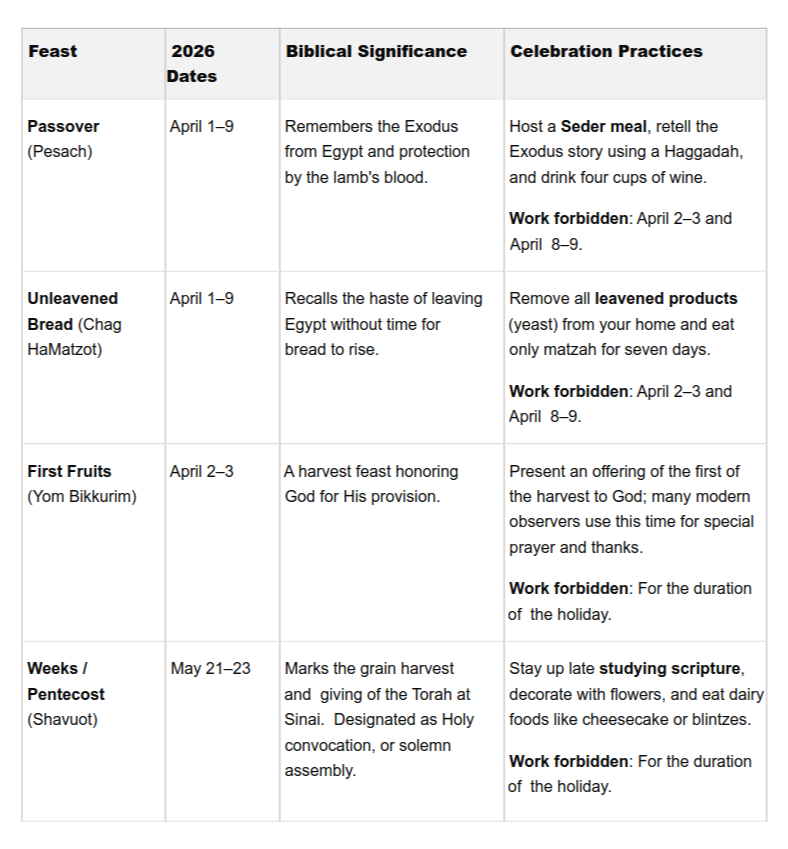
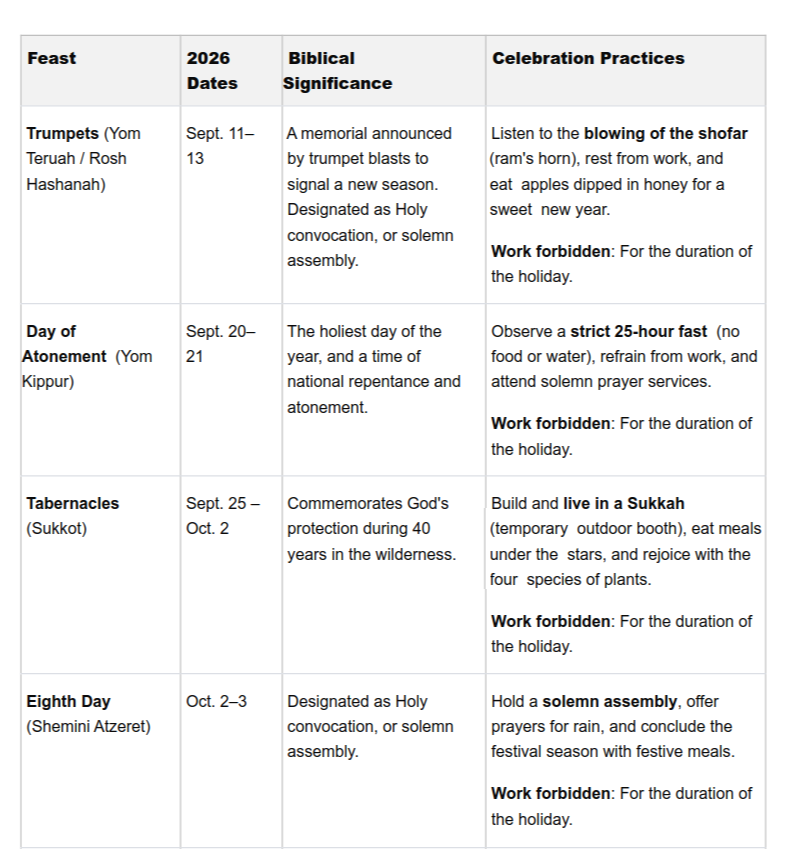
The Bible outlines seven annual feasts and holy days in Leviticus 23. Please note that both the Passover and the Unleavened Bread feasts are considered as one feast celebrated on the same dates. Only the biblical feasts and Holy days required by God are presented, and some traditional feasts and Holy days may be missing, and the list will be updated regularly.
Purim is a biblical feast, but it is unique because it was not instituted nor required by God in the original laws given to Moses as a required God feast to celebrate. Thus, we did not add it to the list. The feasts' dates follow the Hebrew lunisolar calendar, meaning their dates on the standard secular calendar change each year. All biblical feasts and holidays begin atsundown on the evening before the date listed and end at nightfall. On the days where work is forbidden, traditional observance includes refraining from business transactions, manual labor, driving, and using electronics.
God’s instructions for the New Moon (Rosh Chodesh) are more about joyful acknowledgement of a new season. Therefore, unlike the Sabbath, there is no biblical command to stop working; instead, it is a day for specific spiritual markers. Here is what God asks for based on the biblical record:
1. Blow the Trumpets
God explicitly instructs the use of sound to mark the day.
The Command: "Also at your times of rejoicing your appointed festivals and New Moon feasts you are to sound the trumpets..." (Numbers 10:10).
Modern Day: You can blow a trumpet if you've got one, at sundown on the dates listed in the table to acknowledge the new month as a memorial before God.
2. Present Offerings of Worship
In the Old Testament, the New Moon required specific sacrifices (Numbers 28:11-15).
Modern Day: Since the Temple is no longer standing for animal sacrifices, many believers offer sacrifices of praise, such as dedicating time for extra prayer, reading the (Psalms 113–118), or setting aside a special financial gift to God to be thankful.
See more articles via the kingdom menu tab. We invite you to join Stallios our social network and follow our page, kingdom of God. It is especially built to encouraged you spiritually and help you succeed.
Purim is a biblical feast, but it is unique because it was not instituted nor required by God in the original laws given to Moses as a required God feast to celebrate. Thus, we did not add it to the list. The feasts' dates follow the Hebrew lunisolar calendar, meaning their dates on the standard secular calendar change each year. All biblical feasts and holidays begin atsundown on the evening before the date listed and end at nightfall. On the days where work is forbidden, traditional observance includes refraining from business transactions, manual labor, driving, and using electronics.
God’s instructions for the New Moon (Rosh Chodesh) are more about joyful acknowledgement of a new season. Therefore, unlike the Sabbath, there is no biblical command to stop working; instead, it is a day for specific spiritual markers. Here is what God asks for based on the biblical record:
1. Blow the Trumpets
God explicitly instructs the use of sound to mark the day.
The Command: "Also at your times of rejoicing your appointed festivals and New Moon feasts you are to sound the trumpets..." (Numbers 10:10).
Modern Day: You can blow a trumpet if you've got one, at sundown on the dates listed in the table to acknowledge the new month as a memorial before God.
2. Present Offerings of Worship
In the Old Testament, the New Moon required specific sacrifices (Numbers 28:11-15).
Modern Day: Since the Temple is no longer standing for animal sacrifices, many believers offer sacrifices of praise, such as dedicating time for extra prayer, reading the (Psalms 113–118), or setting aside a special financial gift to God to be thankful.
See more articles via the kingdom menu tab. We invite you to join Stallios our social network and follow our page, kingdom of God. It is especially built to encouraged you spiritually and help you succeed.
3
122
1